Seven pages can carry very little text or a dense sequence of panels. A page count is useful metadata, but it is a poor substitute for seeing how a page is built.
Compare the thing that was actually counted
The dated listing showed 7 pages for The Maid, 8 for Dog and Cats, and 19 for Off duty. The number identifies the listed page total; it says nothing verified about panels per page or words per panel.
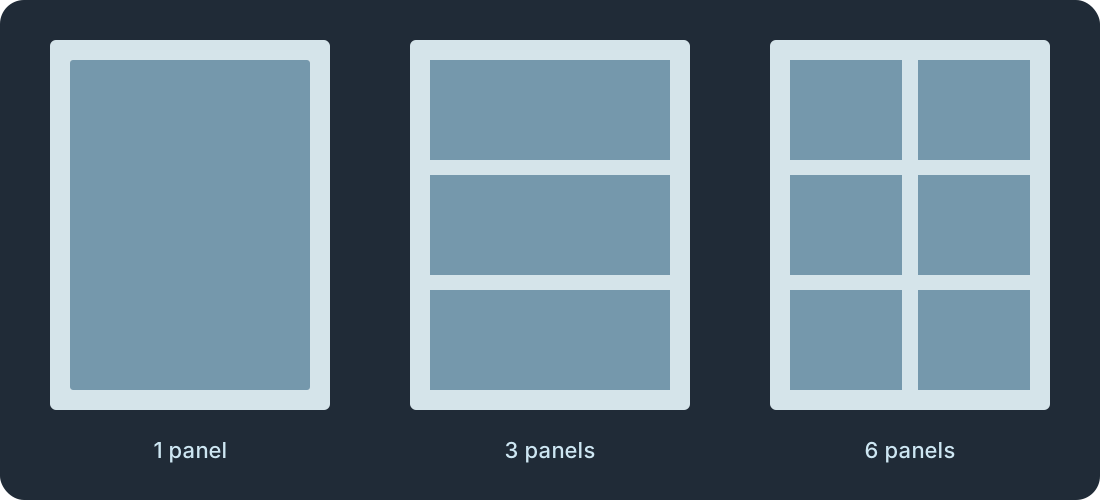
In the diagram, every rectangle is one page. A single large panel, three horizontal panels and six smaller panels all contribute one page to a total. Their reading load can still differ. These blank diagrams are explanatory artwork created for this journal, not reconstructions of the listed works.
Do not turn pages into invented minutes
Our records do not contain a word count, reading-speed measurement or a full editorial reading. We therefore do not label any title “a five-minute read,” or assign a duration based on its page total. Readers also choose different paces for text, images and navigation.
On a phone, a page may need zooming or scrolling. That can change the experience without changing the published number of pages. No current mobile reader behavior is asserted for the three records.
A practical shortlist rule
If you want fewer listed pages, the 7- and 8-page records have lower totals than the 19-page record. Save the title you want to inspect, then verify the reader, layout and access conditions at the destination before committing time or money. Lower page count does not mean lower quality, a simpler story or a complete work.